Dishuu mark DISHUU

Dishuu Dev / Technical papers / Paper 001

Dishuu Zero public white paper

A Dishuu Dev publication covering the architecture, trust model, transport philosophy, and security posture of Dishuu Zero in a public-safe editorial format.

Editorial note

This paper is meant to help developers, partners, and technical reviewers understand what Dishuu Zero is and how it thinks. It is not a full operational blueprint. Details that would make the release more sensitive than useful have been left out of the public edition on purpose.

Abstract

Dishuu Zero is a communications system designed for environments where infrastructure cannot be treated as dependable. It shifts trust, identity, storage, and transport closer to the devices themselves so communication can continue when central systems are unavailable, unreachable, or inappropriate for the situation.

System model

The public system model is straightforward: paired devices communicate directly when local paths are available, use the strongest permitted transport in the moment, and preserve a continuous user experience even when conditions change. The product is built to treat the internet as optional rather than foundational.

Trust model

Trust is created through direct human verification instead of outsourced identity. Participants establish a relationship in person, verify it locally, and carry that relationship forward on the device itself. That design reduces dependence on phone numbers, cloud directories, and transferable centralized accounts.

Security model

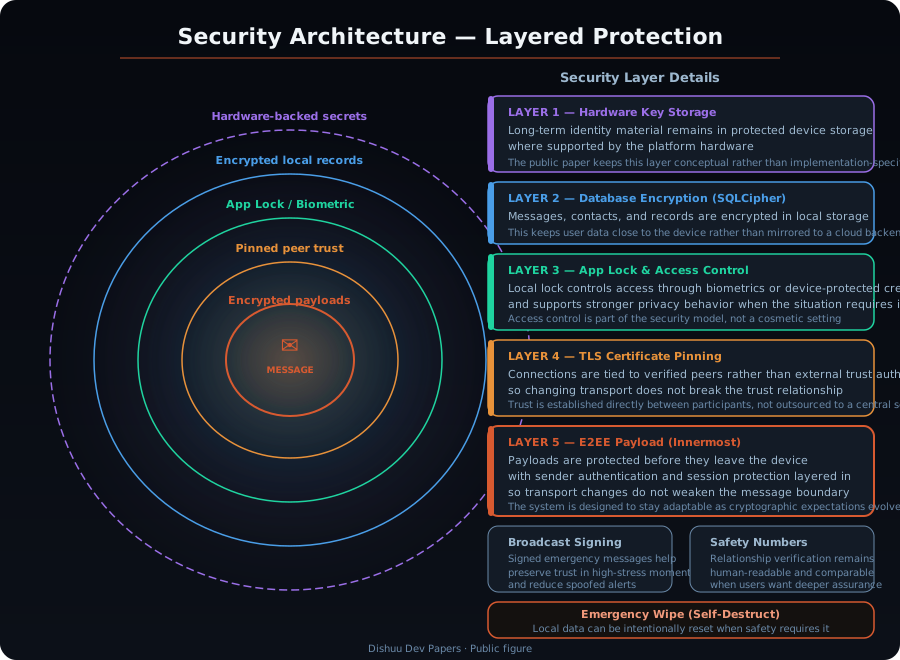
Security in Zero is layered rather than symbolic. Identity material remains on-device, local records are protected in encrypted storage, payloads are protected before transport, and trust is pinned directly to verified peers. The public edition describes these layers conceptually without exposing low-level operational internals.

Figures

Public figures from the paper

The figures below are adapted for the public edition. They preserve the system logic and visual story while omitting lower-level operational detail that does not need to be published openly.
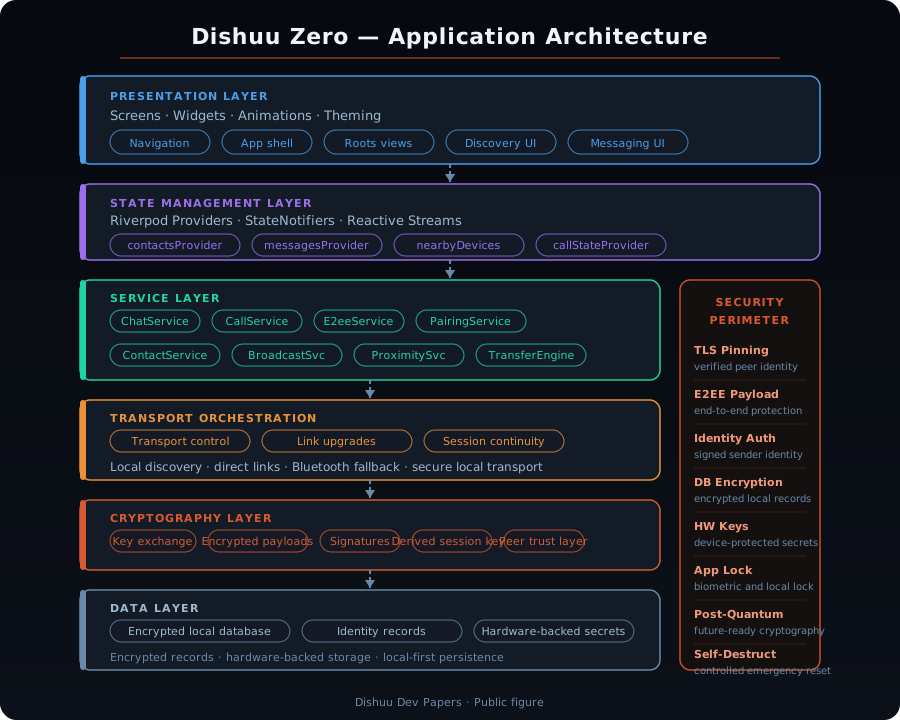
Public-safe architecture overview for Dishuu Zero
Figure 1. High-level application architecture showing presentation, state, service, transport, cryptography, and data layers without exposing implementation-sensitive internals.
Public-safe security layers for Dishuu Zero
Figure 2. Layered protection model showing how hardware-backed identity, local encryption, access control, peer trust, and protected payloads reinforce one another.

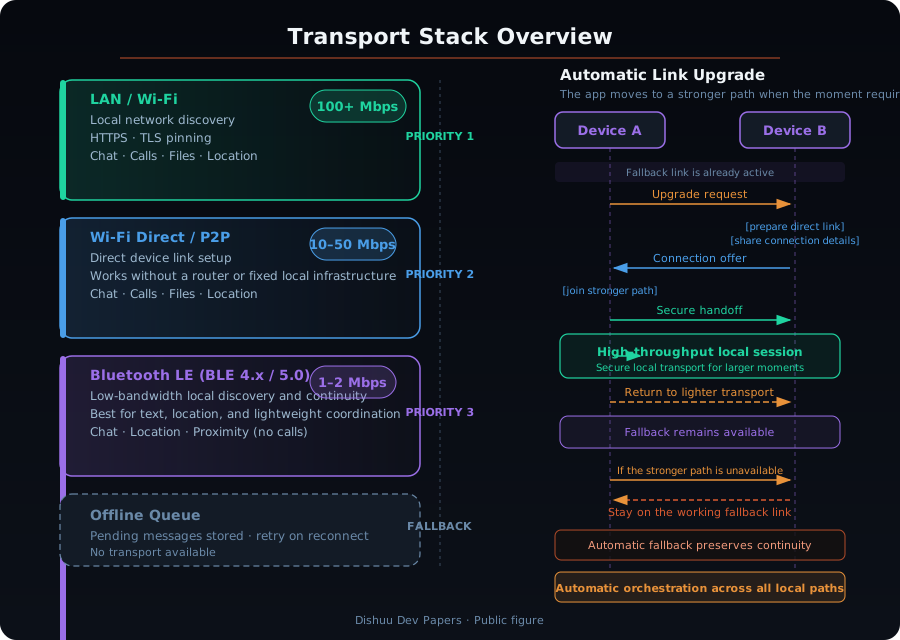
Transport overview

The paper describes user-facing behavior, not low-level transport internals.

Public-safe transport stack overview for Dishuu Zero
Figure 3. Public transport overview showing how Zero moves between local Wi-Fi, direct device links, Bluetooth fallback, and automatic continuity.

Local Wi-Fi

When a shared network is available, Zero uses the highest-throughput local path for calls, files, and fast message movement.

Direct device link

If no router exists in the environment, nearby devices can still establish a direct path and keep coordination moving.

Bluetooth fallback

For text, coordination, and basic continuity, Bluetooth provides the last-mile path when stronger options are unavailable.

Internet-assisted path

When deployments allow it, internet connectivity can be used as an additional option rather than a hard system dependency.

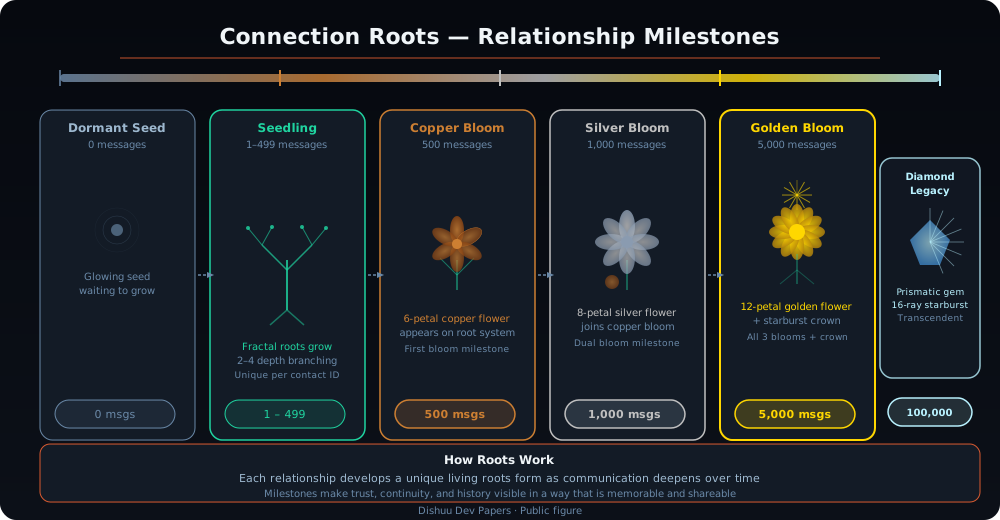
Roots milestones

The relationship layer is also part of the product story.

Roots is one of the most public-facing ideas in the Zero experience: communication becomes visible as a living relationship system rather than a plain contact list. That makes it technically interesting and good publicity at the same time.

Roots relationship milestones for Dishuu Zero
Figure 4. Roots milestone progression, showing how a relationship can evolve from first contact into a recognizable long-term visual identity.

Editorial boundary

Sensitive implementation detail stays out of the public release.

The original technical source document still exists privately. This public edition does not delete or alter that source. It simply publishes a safer layer for open review.

  • Low-level transport identifiers and service records
  • Exact ports, timings, and orchestration internals
  • Detailed upgrade negotiations between transports
  • Operational values that would make the public paper more revealing than useful